Category: Everyday Finds

Practical buying guides for everyday home routines, small-space organization and useful things that earn their place.

  • Navy Sweatshirt and Cream Jeans: A Casual Retro Outfit

    Navy Sweatshirt and Cream Jeans: A Casual Retro Outfit

    A navy sweatshirt, cream jeans and burgundy sneakers are the kind of combination I’d build a casual weekend around. The shapes are familiar, but the lighter denim and deeper red shoes give the outfit a little more personality. I’d wear it for an afternoon of errands, a coffee stop or a browse through the record bins.

    This post contains affiliate links. As an Amazon Associate I earn from qualifying purchases.

    Outfit collage with a navy heather sweatshirt, cream straight jeans, burgundy sneakers, ivory socks and an olive crossbody bag.
    AI-generated outfit illustration using product references and styling accessories. Check the model, color and details in the retailer’s photos before ordering.

    The three pieces I’d start with

    1. A navy-heather sweatshirt with a simple neckline

    My starting point is the Hanes EcoSmart women’s V-notch sweatshirt, style O4633, in Navy Heather. The Hanes product details list a 50% cotton, 50% polyester fleece blend, a relaxed fit and ribbed cuffs and hem. The small V detail keeps the front simple.

    Hanes lists a 28-inch length, so I’d compare that with a top I already like before choosing a size. I’d leave the hem straight or try a small front tuck to show more of the jeans, checking that the fleece doesn’t bunch up the waistband.

    Search Amazon for Hanes O4633 Navy Heather (paid link)

    2. Cream straight-leg jeans with some structure

    I’d pair it with Levi’s 501 ’90s jeans in Ecru, style A19590032. Levi’s describes this version as mid rise, loose through the hip and thigh, with a straight leg and button fly. The Ecru denim is 100% cotton and nonstretch.

    That last detail matters when choosing a size. I’d measure the waist, rise and inseam of jeans that fit me well, then compare those measurements with the product’s sizing information. A familiar size number alone wouldn’t tell me how this different cut will feel.

    Search Amazon for Levi’s 501 ’90s Ecru jeans (paid link)

    3. Burgundy sneakers to finish the palette

    The shoe I picked is the adidas women’s VL Court 3.0 in Collegiate Burgundy/Warm Vanilla/Gum. The exact color shown at Zappos has a burgundy upper, pale stripes and a gum-colored sole. Those pale details connect nicely with the cream jeans.

    I’d check the jean hem while wearing the sneakers: enough length to meet the shoe, without a large pile of fabric hiding it. Cream socks and an olive crossbody from the closet would finish the outfit.

    Search Amazon for adidas VL Court 3.0 Burgundy sneakers (paid link)

    A couple of ways I’d reuse the pieces

    I’d swap the sweatshirt for a burgundy cardigan when I wanted a different texture, keeping the cream jeans as the base. For colder weather, this combination would be my middle layer; I’d add an outer coat appropriate for the conditions.

    The Amazon links open model searches. Match the model, color and selected size, then check the seller and return terms before ordering. Search results can include other styles and colors.

    Product sources checked November 29, 2026.

    More outfit ideas

    I’d also try the olive jacket and dark-jeans outfit or the burgundy cardigan and loafers outfit. The colors can move between all three combinations.
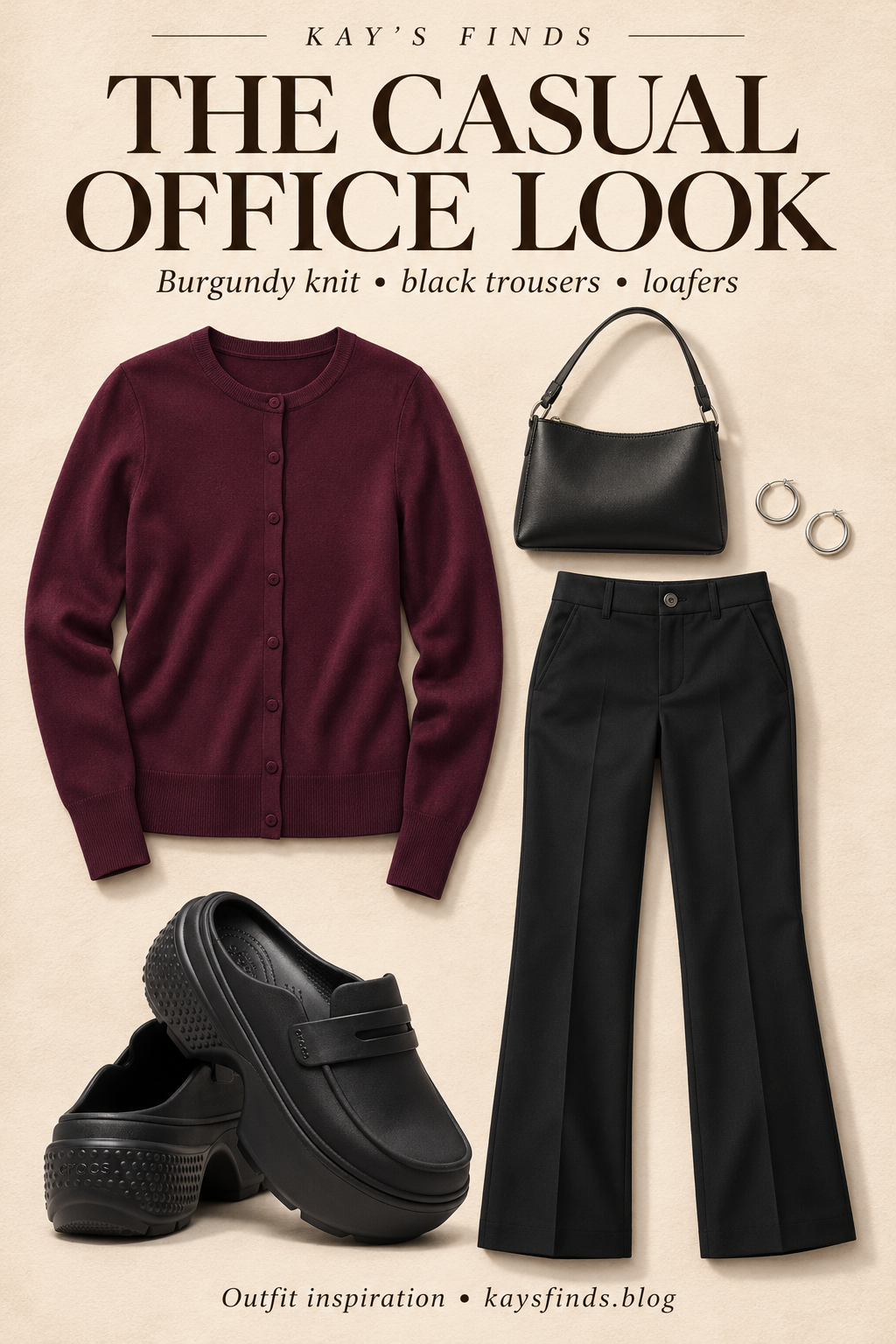
  • Burgundy Cardigan Outfit for Work: Black Trousers and Chunky Loafers

    Burgundy Cardigan Outfit for Work: Black Trousers and Chunky Loafers

    A burgundy cardigan is where I’d start when I want a work outfit with a little color but very few decisions. I’d pair it with black trousers, chunky loafers and a small black bag. The cardigan brings the color; the darker pieces give the outfit a simple shape that’s easy to repeat.

    This is the combination I’d put into a casual-office rotation, then adjust for the day’s dress code and weather. These are styling picks, with the product details checked below.

    This post contains affiliate links. As an Amazon Associate I earn from qualifying purchases.

    Outfit collage with a burgundy crewneck cardigan, black trousers, chunky black loafers, a small black bag and silver hoop earrings.
    AI-generated outfit illustration using product references and styling accessories. Check the model, color and details in the retailer’s photos before ordering.

    The burgundy cardigan I’d build around

    My starting point is the Amazon Essentials Women’s Lightweight Crewneck Cardigan Sweater in Burgundy, model WAE35003FL18. The retailer’s product information identifies a regular fit, cotton-blend knit and button front. The product photo shows a muted, plum-leaning burgundy, small matching buttons and a hem around the hip.

    I’d wear it buttoned over a simple base layer, with the neckline kept clear. Before choosing a size, I’d compare the chest and length measurements with a cardigan I already like, allowing room for that layer. The fine knit is the detail I’m choosing here; a thick, cropped cardigan would change the proportions.

    Search Amazon for the Amazon Essentials burgundy crewneck cardigan (paid link).

    Black trousers with enough room at the hem

    The Lee Women’s Ultra Lux Comfort with Flex Motion Trouser Pant in Black is the trouser shape I’d use. The listed model has a regular fit, mid-rise waist and zipper-and-button closure. Its product photo shows a pressed crease and a slightly flared opening.

    I’d check the inseam with the actual loafers on. I want the hem to clear the floor and fall cleanly over the shoe, with enough movement for walking and sitting. Lee has several similarly named Flex Motion styles, so I’d match the full trouser name and silhouette before choosing a length.

    Search Amazon for the Lee Flex Motion black trousers (paid link).

    The chunky loafer detail

    I’d finish with the Crocs Stomp Loafer, model 209937, in Black/Black. Crocs lists a molded Croslite upper, penny-keeper detail, exaggerated lug sole and a 2.2-inch heel. That substantial sole is why I’d check the trouser length carefully.

    I’d try the loafers with the socks I plan to wear, checking for heel movement and pressure around the toes. Their molded construction also makes them a dress-code decision: I’d keep this version for an office that welcomes casual footwear.

    Search Amazon for the Crocs Stomp Loafer 209937 (paid link).

    The finishing pieces can come from my closet

    A small black shoulder bag and simple silver hoops are the extras I’d pull first. For a more relaxed day, I’d swap the trousers for dark straight jeans and keep the cardigan. I’d set out the socks and shoes alongside the clothes, using my Sunday work-outfit lineup to make the combination easy to find again.

    The shopping links open Amazon search results. Check the exact model, color, size, seller and return terms on the item you select; availability and prices vary.

    Product sources checked November 29, 2026.

    More outfit ideas

    I’d also try the olive jacket and dark-jeans outfit or the navy sweatshirt and cream-jeans outfit. The colors can move between all three combinations.

  • Olive Utility Jacket Outfit: Dark Jeans and Chelsea Boots

    Olive Utility Jacket Outfit: Dark Jeans and Chelsea Boots

    I’d build this weekend outfit around an olive utility jacket, dark straight jeans and black Chelsea boots. The ivory knit keeps the colors from feeling too heavy, and a small burgundy bag adds just enough contrast. It’s the combination I’d put together for a bookstore stop, lunch and a few errands on the same afternoon.

    This post contains affiliate links. As an Amazon Associate I earn from qualifying purchases.

    Outfit collage with an olive utility jacket, ivory knit, dark straight jeans, black Chelsea boots and a burgundy crossbody bag.
    AI-generated outfit illustration using product references and styling accessories. Check the model, color and details in the retailer’s photos before ordering.

    The outfit formula

    My starting point is an olive jacket with a high collar, four practical pockets and an adjustable waist. Underneath, I’d use an ivory long-sleeve knit with enough room through the sleeves to move easily. Dark indigo jeans and simple black boots give the outfit a clear shape; the burgundy bag is the one extra color.

    The knit and bag are places to use what’s already in the closet. A cream sweater, an ivory ribbed top or a small black crossbody can all do the same job.

    Three pieces I’d compare

    1. An olive utility jacket with room to layer

    I’m choosing the jacket by its shape: a defined collar, useful pockets and a waist that can be adjusted without pulling across the front. I’d check the listing photos and garment measurements with the intended knit in mind. Utility jackets vary in their closures, lining and fabric, so the model name alone doesn’t settle those details.

    Search Amazon for an Amazon Essentials women’s olive utility jacket (paid link)

    2. Levi’s 724 jeans in Cast Shadows

    The Levi’s 724 Cast Shadows style has a high rise, a straight leg and a slim fit through the hip and thigh. That last detail matters: I’d choose it for a closer fit, then compare the available inseams with a pair of jeans that already works. A roomier straight leg is an easy substitution.

    Search Amazon for Levi’s 724 Cast Shadows jeans (paid link)

    3. Black Chelsea boots with a simple sole

    The Dr. Scholl’s Northbound in Black Smooth has stretch side panels, a rear pull tab and a lug sole. The Black Smooth upper is faux leather. I’d try it with the socks I plan to wear and check toe room and heel movement before deciding on the fit.

    Search Amazon for Dr. Scholl’s Northbound Black Smooth boots (paid link)

    These paid links open model searches. Check the exact color, size, seller, product details and return terms on the listing you select; prices and availability vary.

    The jean-and-boot hem test

    I’d put on both pieces and take a few steps, then sit down. The hem should fall where I want it without catching on the boot shaft or dragging under the sole. A small cuff may work with a longer inseam. If the opening keeps snagging, I’d try a wider leg or a different length.

    Keep the pieces in rotation

    For another version, I’d swap the ivory knit for charcoal and keep the jacket, jeans and boots. The same knit can also anchor a Sunday lineup of work outfits. I like an outfit idea more when its pieces have somewhere else to go.

    Product information and sources checked November 29, 2026.

    More outfit ideas

    I’d also try the burgundy cardigan and loafers outfit or the navy sweatshirt and cream-jeans outfit. The colors can move between all three combinations.

  • Green Vibrance, B12 and Cat’s Claw: What I Found in the Research

    Green Vibrance, B12 and Cat’s Claw: What I Found in the Research

    I’ve been taking Green Vibrance, so I wanted to look more closely at what it adds to a nutrition routine. The photos of greens powders, B12, herbal drops and a whole box of extras made me curious about the reason for each bottle.

    My question is straightforward: what does the label tell me, what has actually been studied in people, and what would justify adding another supplement? These are my research notes, with the sources linked so you can check them too.

    The Green Vibrance label I checked

    This is Green Vibrance Original, Version 22.0, as shown on the manufacturer’s current product page and Supplement Facts panel. An older container, a different flavor or Maximum Vibrance can have different facts.

    Label detailPer 11.2 g scoop
    Calories40
    Protein2 g
    Fiber3 g
    Vitamin B122 mcg
    Iodine154 mcg
    Probiotic count25 billion CFU at manufacture

    My takeaway from those amounts: I’d still plan breakfast. The powder by itself provides very little food energy or protein for a meal. Its fiber contributes to a day’s intake, but I’d keep making room for foods such as oats, beans, fruit and vegetables. NIH explains why supplements cannot replace a varied diet.

    An ingredient detail worth checking: this version lists organic carrot-root powder. Anyone with a food allergy needs to check the complete current label and discuss suitability with their clinician; the “greens” category alone tells us very little about what is inside.

    What the probiotic number tells me

    The phrase “at manufacture” matters because live organisms can decline during storage. NIH’s probiotic guidance recommends looking for a count through the end of shelf life, and explains that a larger number of colony-forming units does not automatically mean a better result.

    The other question is which organisms were studied for which outcome. The label’s species names alone do not give me enough information to match all of them to a particular clinical trial. A specific strain, its amount and the reason for using it matter.

    There is some encouraging research on certain probiotics: a 2022 Cochrane review found possible benefits for respiratory infections, with low-to-moderate certainty depending on the outcome. That finding does not establish that every probiotic works, that Green Vibrance produces the same result, or that adding a second probiotic improves the combination.

    Does the greens, B12 and cat’s-claw combination prevent sickness?

    I did not find evidence establishing that combination as an illness-prevention routine. Targeted searches of the product name, PubMed, ClinicalTrials.gov and manufacturer research did not identify a qualifying peer-reviewed randomized human trial of finished Green Vibrance or Version 22.0 showing fewer infections. This describes the research located, rather than proving no unpublished study exists. Studies of a different greens brand cannot answer that question for this product.

    NIH’s immune-function review makes the broader point: adequate nutrients are important, while routine extra micronutrients probably do little to prevent or treat specific infections when a deficiency is absent. Someone’s account of rarely getting sick cannot show which product caused that outcome.

    B12: useful when there is a reason for it

    Vitamin B12 has an established role in preventing and treating inadequate B12 status. Low intake and absorption problems are examples of reasons someone might need it. That is a different question from buying a high-potency bottle to prevent colds. The amount in a greens powder also does not replace a treatment plan for a diagnosed deficiency.

    Cat’s claw: the claim goes beyond the human evidence

    NCCIH finds no conclusive human evidence supporting cat’s claw for a health purpose. It also describes possible effects on clotting and interactions with medicines. I wouldn’t add it to a routine because a social post says the combination keeps sickness away.

    How I’d assess the other bottles in the reference photo

    The giveaway photo does not show every ingredient panel, concentration or dose. These are findings about the categories, rather than verified assessments of each exact pictured formula.

    The decision I’d make before buying anything else

    I’d write down the reason for a supplement, the amount already coming from other products, and the evidence for the specific formula or ingredient. Then I’d review the actual labels with a pharmacist or clinician, including medicines and food allergies. That gives a new purchase a clear job.

    For the everyday routine, I’d put my effort into food I can prepare, pack and enjoy consistently. My workday nutrition routine brings that together with breakfast, a packed lunch and a convenient backup.

    Research and label checked November 29, 2026. This is general nutrition information, not an individual supplement prescription.

    Save this research guide

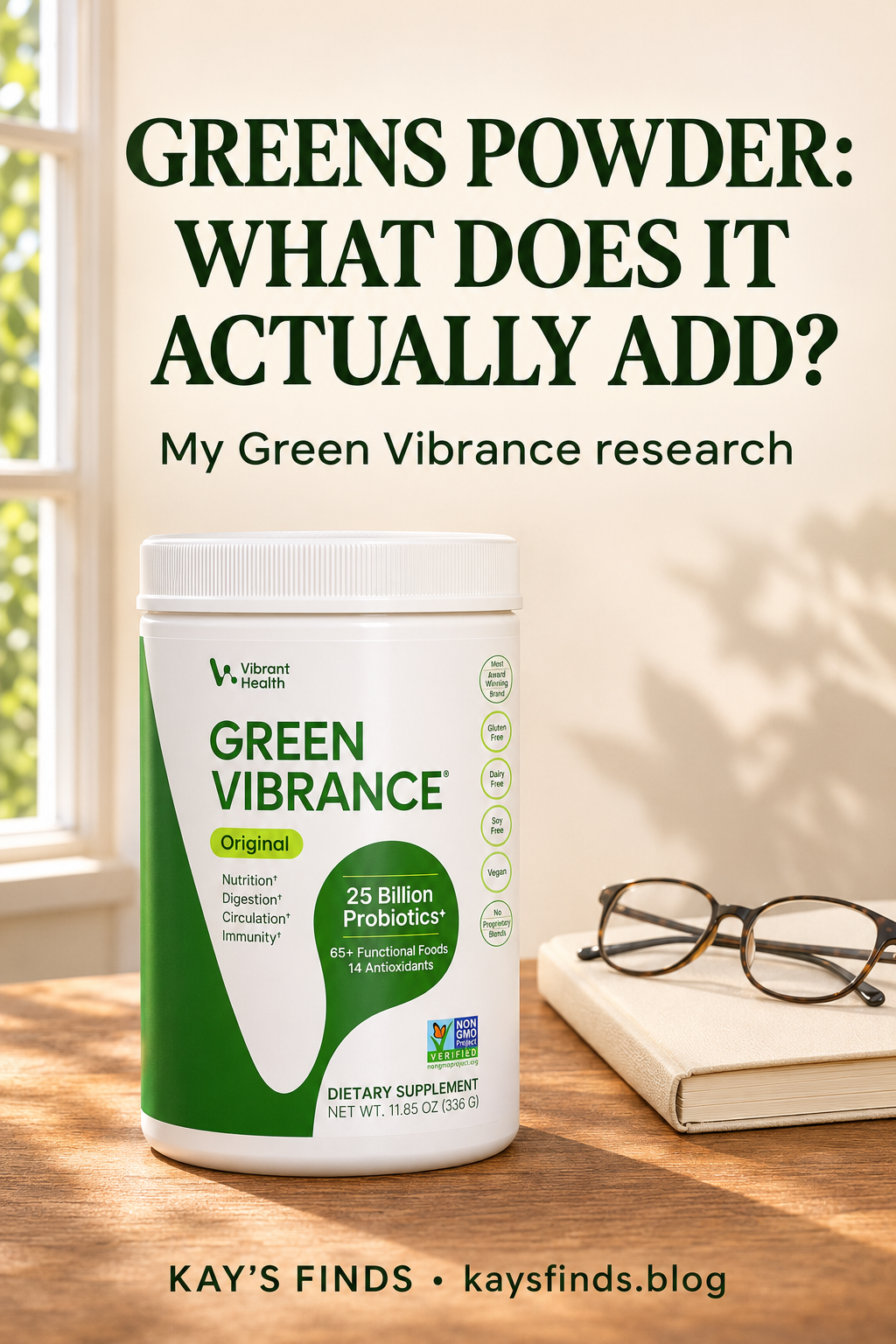
    Green Vibrance Original container beside a notebook and reading glasses; text reads Greens Powder: What Does It Actually Add? My Green Vibrance research.
    AI-generated editorial illustration using a product reference image.
  • The Workday Nutrition Routine I’d Put Together for Busy Days

    The Workday Nutrition Routine I’d Put Together for Busy Days

    I want food to have a place in my workday before the commute starts and the day gets busy. Breakfast I can find, a lunch I’m looking forward to and something available if the afternoon runs long would be a useful start.

    Here’s the version I’m putting together. I’d begin with a few repeatable meals, choose foods I enjoy and make the packing part easy enough to do again tomorrow.

    The broad starting point comes from WHO’s healthy-diet guidance: enough food to meet individual needs, variety across food groups, and regular sources of whole grains, fruit, vegetables, pulses and protein. Here’s how I’d turn that into ordinary workday decisions.

    Choose breakfast before I’m looking for my keys

    I’d keep two options in mind: plain Greek yogurt with oats and berries, or eggs or tofu with whole-grain toast. I can choose between them based on what is already in the kitchen and how much time I have.

    For a breakfast that travels, my grab-and-go overnight oats post has the preparation steps. The useful part of this routine would be deciding tonight whether breakfast is happening at home or coming with me. Then I’d put the spoon where I’ll see it and keep anything perishable refrigerated until packing.

    Build lunch from a few familiar ingredients

    One lunch I’d put together is chicken or tofu, rice, beans or lentils, and broccoli, with olive oil and seasonings I like. I’d change the vegetables or grain when I want something different and adjust the amount to my appetite and day.

    I’d start by checking what needs using in the fridge. A cooked ingredient from dinner can help decide tomorrow’s lunch, and a sauce packed separately can give the same basic ingredients a different direction.

    For the commute, USDA’s packed-lunch guidance recommends an insulated bag with at least two cold sources for perishable food. I’d keep the prepared food chilled, pack before leaving and refrigerate it when I arrive if a fridge is available.

    If finding a matching lid is the part that slows things down, my lunch-packing guide covers a few practical options. I’d begin with containers I already own.

    Give fiber a regular place, and build up gradually

    I’d look for opportunities to include oats, whole grains, beans, lentils, fruit and vegetables across the day. A large review of fiber research found improvements in cholesterol and systolic blood pressure in clinical trials; the links with lower disease risk came from observational studies, which cannot by themselves establish cause and effect.

    For the practical change, I’d add higher-fiber foods gradually. NIDDK advises increasing fiber a little at a time and drinking enough fluids. That gives me a manageable starting point when changing what goes into my meals.

    Have an afternoon option I’ll actually eat

    I’d pack a banana with a small packet of nuts or seeds that suits my needs, or keep yogurt in the work fridge. The choice would depend on what I like, what I’m hungry for and the storage available.

    A backup earns its place by being easy to find. I’d check it when writing the grocery list and replace what I used, so the next busy afternoon has an option ready.

    Keep water within reach and tomorrow’s prep small

    I’d bring a water bottle I already have and know where I can refill it during the day. Keeping it accessible is the part I can plan before leaving home.

    In the evening, I’d choose tomorrow’s breakfast, refrigerate the lunch ingredients and put the cold packs back in the freezer. Then I’d leave the empty lunch bag and utensils together. Those few decisions would give tomorrow a starting point.

    Give each supplement a clear reason

    Alongside the meal plan, I’d want to understand what each supplement adds. My Green Vibrance, B12 and cat’s-claw research notes cover the current label, the evidence behind the claims and the questions I’d ask before buying anything else.

    The minimum version for a rushed day

    • Choose a breakfast I can manage.
    • Make a lunch plan and keep perishable food cold.
    • Bring water and a convenient food backup.

    This is general food-planning information. Food choices and amounts should fit individual needs; a registered dietitian can help personalize them.

    Sources checked November 29, 2026.

    Save this workday routine

    Bowl of Greek yogurt, oats and blueberries beside a glass of water; text reads My Workday Nutrition Routine, Breakfast, lunch + a backup.
    AI-generated editorial food illustration.
    Packed lunch with rice, lentils, chicken and broccoli, an apple, an insulated bag and two cold packs; text reads What I’d Pack for a Long Workday.
    AI-generated editorial food illustration.
  • The Get-Ready-for-Bed Routine I’d Put Together After a Long Day

    The Get-Ready-for-Bed Routine I’d Put Together After a Long Day

    At the end of a long day, I want getting ready for bed to feel like I’m finally putting things down. Wash my face, change into something comfortable, put the bathroom things away and have a little time that belongs to the evening.

    Here’s the version I’m putting together: a simple bathroom routine, a couple of things within reach beside the bed and one small favor for tomorrow morning. I’d choose the pieces that fit the routine I already have.

    This post contains an Amazon affiliate link. As an Amazon Associate I earn from qualifying purchases. The other product links go directly to the brand or retailer.

    First, get the bathroom part finished

    I’d start with the cleanser and oral-care products I already use. Having those steps finished before I settle in with a book would make the rest of the evening feel easier to follow through on.

    For the face-cream step, the ANUA PDRN Hyaluronic Acid 100 Moisturizing Cream is the one I’d look at from this lineup. ANUA’s directions place it at the end of the skincare routine as the moisturizer. For this evening plan, it would be my final face-cream step.

    The bottle to look for is the Moisturizing Cream, 2.02 fl oz. ANUA’s PDRN range includes other products, so the full name matters.

    See the ANUA PDRN Hyaluronic Acid 100 Moisturizing Cream on Amazon (paid link).

    Change into something I actually want to wear around the house

    The pink piece that caught my eye is the Frankies Bikinis x Barefoot Dreams Sunrise Knit Tank Top in Cotton Candy. I’d pair it with comfortable bottoms I already have and leave the outfit where I can reach it after washing up.

    Two details matter before ordering: Cotton Candy is the color name, and the fabric is 100% polyester. The linked item is the tank on its own. I’d check the size and fabric-care instructions, then decide whether it fills a gap in my drawer. A favorite old T-shirt can do this part of the routine, too.

    Keep the last two products beside the bed

    I’d give lip care and hand cream a small, specific spot beside the lamp. That way, the last few minutes can happen while I’m sitting down, and I can put everything back without getting up again.

    A lip mask after the bathroom steps

    The OneSkin OS-01 LIP MASK starter set comes in a 7 mL size with a metal applicator. The brand’s directions are to apply a generous layer to clean, dry lips; it can be left on overnight. That gives it a clear place at the end of this routine.

    For a first purchase, I’d choose the starter set with the complete packaging. The refill and the OS-01 LIP SPF are separate products.

    Hand cream before I pick up my book

    The hand-care pick is Beekman 1802 Milk RX Advanced Better Aging Hand Renewal Cream. The directions cover hands and cuticles, massaging the cream in until absorbed. I’d do that before opening a paperback or touching the lamp switch.

    One ingredient detail to know: it contains lactic acid, which matters if you avoid exfoliating acids in your hand products.

    Leave one thing ready for the morning

    Before settling in, I’d choose one tiny setup: put my keys with my bag, leave tomorrow’s clothes together or set the shoes by the door. My night-before walking setup is the same idea applied to an early start.

    On a hair-wash night, I’d finish the washing and drying steps before this bedside part. My wash-night product order walks through where the JVN scalp oil, OUAI leave-in and optional OLAPLEX finishing oil would fit.

    The version I’d keep when I’m already tired

    • Finish my usual face and oral-care steps.
    • Change into comfortable clothes.
    • Use the lip or hand product I want that night, put it back and settle in.

    That’s the routine I want to build around: a few familiar steps, products with a clear purpose and an easy place to stop.

    Product details and brand directions checked November 29, 2026.

    Save this bedtime routine

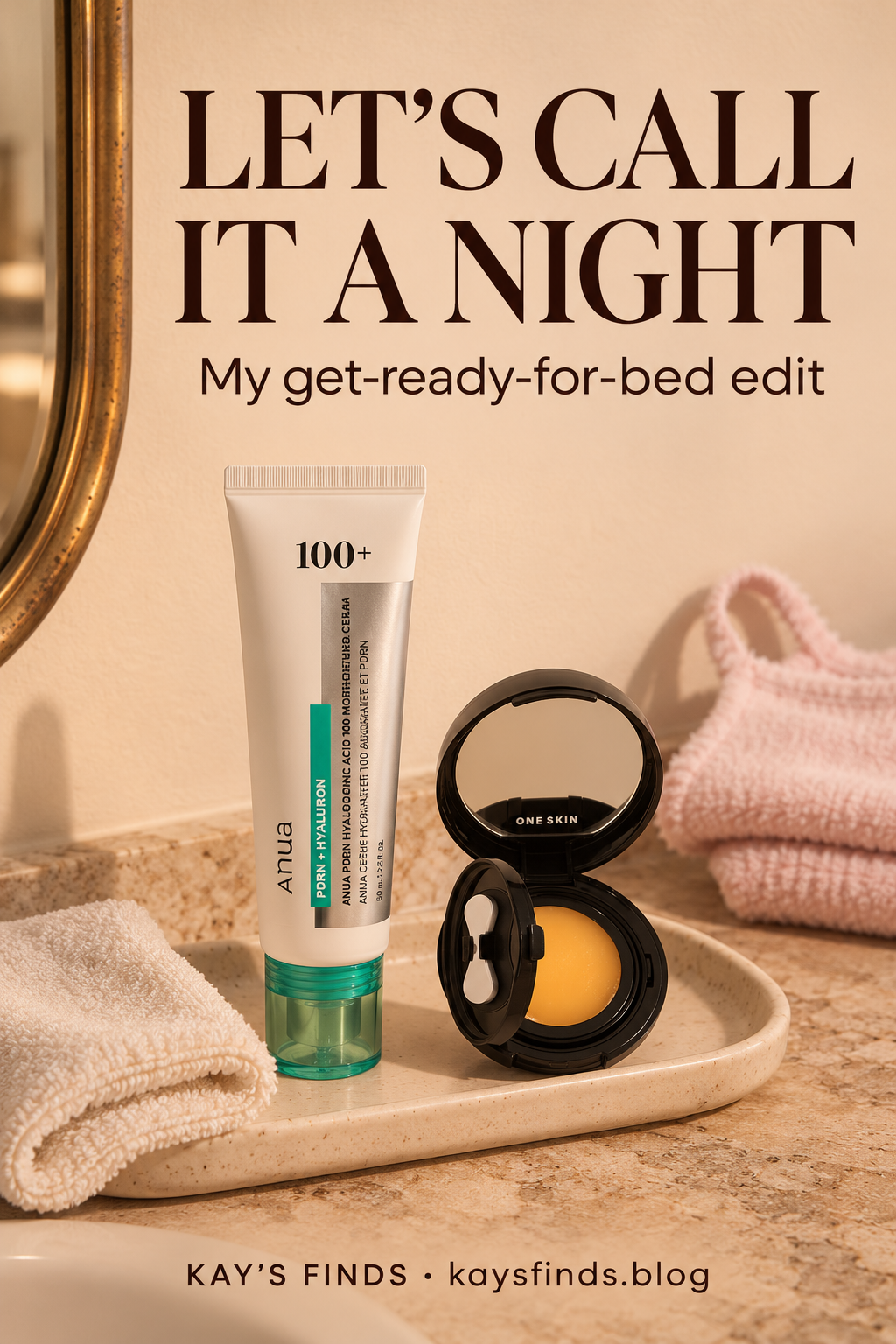
    Warm bathroom vanity with ANUA moisturizing cream and a OneSkin lip mask; text reads Let’s Call It a Night, My get-ready-for-bed edit.
    AI-generated editorial illustration using product reference images.
    OneSkin lip mask and yellow Beekman Milk RX hand cream on a warmly lit nightstand; text reads The Last Two Steps, Lip mask + hand cream.
    AI-generated editorial illustration using product reference images.
  • Hair Oil Before or After the Shower? My Wash-Night Order

    Hair Oil Before or After the Shower? My Wash-Night Order

    I’m putting together a wash-night routine with a clear place for each product. There’s something appealing about knowing what comes before the shower, what goes on afterward, and which extras can wait for another night.

    For this lineup, I’d start with three finds: JVN Complete Pre-Wash Scalp Oil, OUAI St Barts Leave-In Conditioner, and OLAPLEX No.7 Bonding Oil. They belong at different points in the routine. Here’s the order I’d follow, with room to keep things simple when I’m ready for bed.

    Affiliate disclosure: This post contains an affiliate link. If you buy through it, I may earn a commission at no extra cost to you. As an Amazon Associate I earn from qualifying purchases.

    The wash-night order at a glance

    1. Before the shower: optional JVN scalp oil, followed by shampoo.
    2. After washing: optional OUAI leave-in on wet hair.
    3. For styling or finishing: optional OLAPLEX No.7 on damp or dry hair.

    I’d choose the extras around the time I have. My regular shampoo and rinse-out conditioner would still be the starting point for wash night.

    1. Before the shower: JVN Complete Pre-Wash Scalp Oil

    This is the bottle I’d set out before turning on the shower. According to JVN’s directions for Complete Pre-Wash Scalp Oil, it goes directly onto a dry scalp before shampooing. The amount is 1–3 droppers, followed by a gentle massage and a 10–15-minute wait.

    I’d use that waiting time to lay out pajamas or gather the rest of my shower things. Then I’d shampoo it out and continue with my usual wash routine. The timing is the detail I’d keep in mind: JVN specifically says it doesn’t recommend leaving this oil on overnight.

    I’d save this step for evenings when I have those extra 10–15 minutes.

    2. After washing: OUAI St Barts Leave-In Conditioner

    Once I’m out of the shower, the leave-in has its own place. The OUAI St Barts Leave-In Conditioner directions say to spray onto wet hair from 6–8 inches away, working from eyeline down, then distribute it with a wide-tooth comb.

    I’d keep the application focused on that section of my hair and leave it in before air-drying or styling. That makes it easy to remember its job in the lineup: an after-wash leave-in step, separate from the scalp treatment that gets shampooed out.

    I’d also check the scent before adding it to my cart. The version on this shortlist is St Barts; OUAI also sells other fragrances under the leave-in conditioner name.

    3. Damp or dry hair: OLAPLEX No.7 Bonding Oil

    For the finishing option, I’d keep the amount small. OLAPLEX’s No.7 directions call for 2–3 drops on damp or dry hair. The bottle dispenses metered drops when turned upside down and gently tapped on the bottom.

    In the routine I’m putting together, I’d treat it as an optional finish once my hair is dry. The brand also allows it on damp hair before styling, so that placement can change with the evening’s plan. I’d choose one placement to start and follow the bottle’s directions.

    Shop OLAPLEX No.7 Bonding Oil, 30 mL, on Amazon — paid link.

    What I’d double-check before buying

    My shortlist is the 50 mL JVN scalp oil, the St Barts OUAI leave-in, and the 30 mL OLAPLEX No.7. I’d compare the product name, fragrance, size, and current package directions before choosing a bottle.

    My tired-night version

    On a late wash night, I’d skip the pre-wash treatment, shampoo and condition as usual, and choose a leave-in step if I want one. The finishing oil can be optional, too. If I’m not washing my hair that evening, I’d save the JVN oil for a night when I can shampoo it out after the recommended wait.

    For the rest of the evening, my get-ready-for-bed routine edit brings together the face-cream step, comfortable clothes and two bedside finds.

    Product details and brand directions checked November 29, 2026.

    Save this wash-night guide

    JVN pre-wash scalp oil, OUAI St Barts leave-in conditioner and OLAPLEX No.7 oil on a bathroom counter; text asks Hair Oil: Before or After the Shower?
    AI-generated editorial illustration using product reference images.
  • Give the Mail Pile an Exit Plan: A Small Paperwork Station

    Give the Mail Pile an Exit Plan: A Small Paperwork Station

    The counter becomes a waiting room for paper surprisingly quickly. A return slip lands under an envelope, a form gets mixed in with receipts, and suddenly the corner is occupied. A small paperwork station needs three jobs: somewhere to see the next action, somewhere for handled papers, and labels that tell you where things belong.

    I’d start with one pile and the supplies already at home. Then buy only the piece that is missing.

    This post contains affiliate links. As an Amazon Associate I earn from qualifying purchases.

    1. Give an existing tray one clear job

    A shallow letter tray, folder or tray you already own can hold the small group of papers that still need attention. Open the incoming mail, identify the next action, and put only the relevant paper here.

    Write a short note such as “complete form,” “bring to appointment” or “check return” and include any date you need to remember. Keep that note visible on top. If unopened mail needs a temporary landing spot, give it a separate folder so it does not hide the tasks you have already identified.

    Before buying a tray: Place your usual papers in the space you want to use. Check the usable inside area, not just the outside dimensions. Large envelopes, A4 sheets and legal-size papers may need more room than a letter-size tray provides.

    Skip the purchase if: An existing tray or folder does the job. The useful change here is deciding what belongs in it and when you will empty it.

    2. File handled papers in a way you will remember

    The Smead 70186 Kraft monthly expanding file is worth considering for a manageable collection you want to retrieve by month. The manufacturer’s page lists 12 January–December pockets, a flap with elastic closure and a 12-by-10-inch exterior. Each pocket has 7/8-inch expansion.

    Use it for papers you have already handled and chosen to keep. “The receipt from September” is a good match for monthly tabs. If you usually search by household member, project or subject, choose a file with categories that match that habit.

    Before buying: Confirm the letter-size, January–December version. The exterior measurement does not establish that A4 or legal pages fit properly. Also check that you want monthly tabs rather than alphabetical or daily indexing.

    Skip it if: You need an archive for boxes of paper. This is a compact working file, and cramming everything inside will make it harder to use.

    3. Add a label maker only if you have labels to repeat

    For a broader labeling job, the Brother P-touch PT-H110 has its own keyboard and uses TZe tape up to 12 mm wide. Brother’s standard package details include a sample tape. Power comes from six AAA batteries or an optional AC adapter, both sold separately.

    This makes sense if you will repeat labels across files, storage boxes and drawers. The labeler can live with the supplies you already use for those jobs.

    Before buying: Compare the standard unit with any tape bundle, and check what is included. A bigger bundle is useful only if the extra tape sizes and colors fit your plans. Include the power source in the total cost.

    Skip it if: You only need to label one tray and one file. A pen and a removable label will get the system started.

    A short reset keeps the station useful

    • Review the visible papers at a regular time that fits your week.
    • Finish the next action or put its date in the reminder system you already use.
    • Move handled papers to the right file, then leave the tray ready for the next item.

    The test is whether you can find the paper and tell what needs to happen next. Keep the setup small enough that checking it feels manageable.

    For other recurring piles, see nine useful decluttering ideas for small homes.

    Researched buying guide, checked November 29, 2026. These products have not been personally tested for this article. Check the selected model, pack contents and current purchase terms at Amazon.

    Save this guide

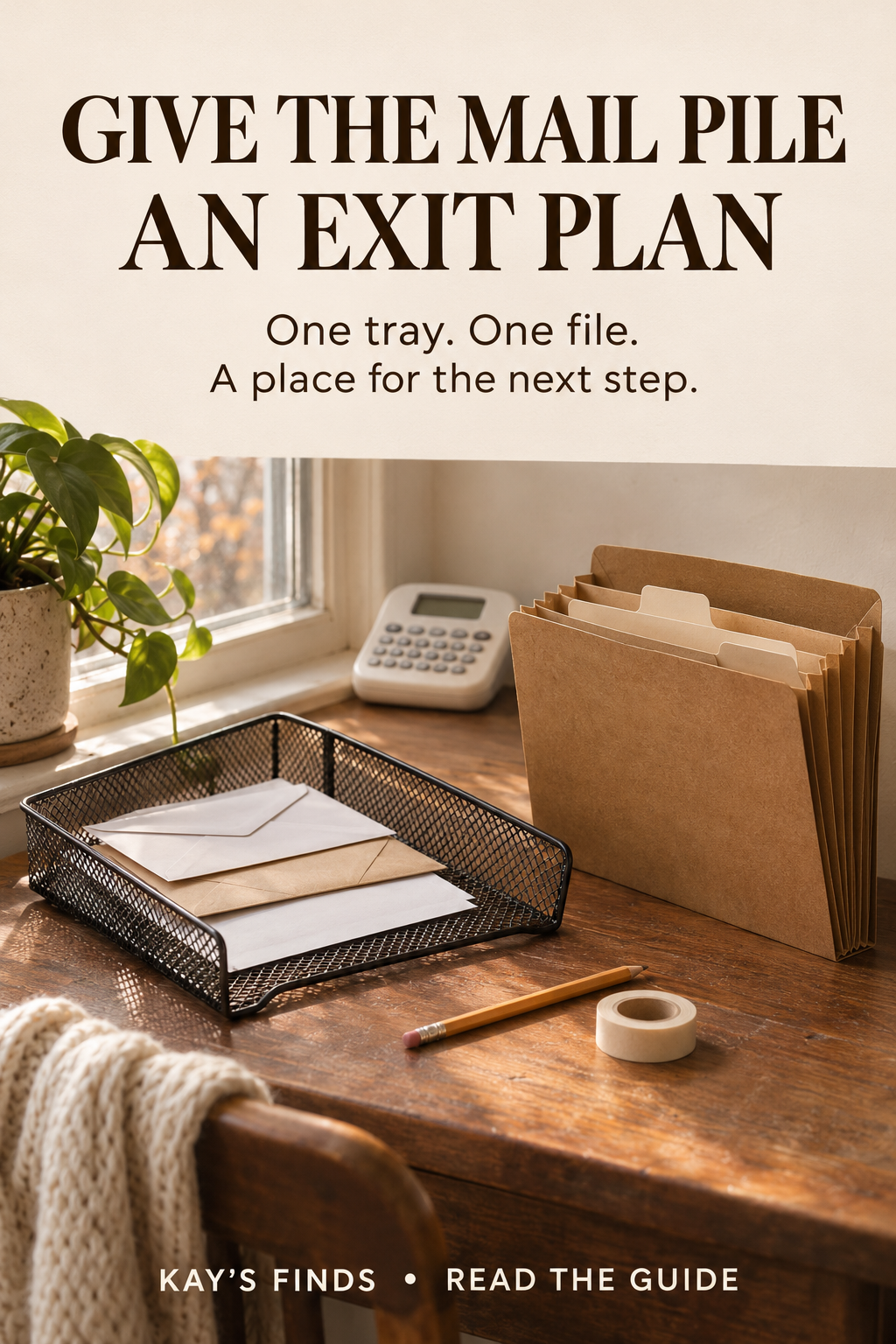
    AI-generated editorial illustration of a home desk with a letter tray, kraft expanding file, pencil and label maker. Text reads: Give the mail pile an exit plan. One tray. One file. A place for the next step.
    AI-generated editorial illustration of a suggested setup. Actual product appearance varies; see the linked product details.

    Browse more practical home guides in Everyday Finds.

  • 3 Lunch-Packing Upgrades for When the Lid Drawer Is Working Against You

    3 Lunch-Packing Upgrades for When the Lid Drawer Is Working Against You

    Packing lunch sounds simple until the food is ready, the bag is open and the only lid you can find is almost the right size. Start with the thing that slows you down: replace missing matches, give existing lids a visible home, or add a small pot for sauces.

    These three options cover different problems. I’d fix the recurring annoyance before buying an entirely new lunch setup.

    This post contains affiliate links. As an Amazon Associate I earn from qualifying purchases.

    Which part of packing lunch needs help?

    The recurring problemThe purchase to consider
    Too few usable container-and-lid pairsA matching container set
    Good containers, but lids disappearAn adjustable lid organizer
    Sauces need their own sealed spaceSmall condiment pots

    1. Matching containers when every lunch starts with a guessing game

    The Rubbermaid Brilliance plastic set with five 3.2-cup containers and matching lids is worth comparing if you need several containers of the same size. The appeal is a repeatable routine: wash, dry, stack and reach for a matching pair.

    Rubbermaid’s Brilliance plastic range uses latching lids and built-in microwave vents. The manufacturer lists dishwasher, microwave and freezer compatibility; follow the instructions for the set you select.

    The count to check: Five containers plus five lids makes a 10-piece set. That does not mean ten containers ready to fill. Also confirm plastic versus glass, since both appear in the Brilliance range.

    Choose this if: You are short on intact, matching pairs. Skip it if: Your existing containers work once their lids are reunited.

    2. A lid organizer that has room for the lids, too

    The YouCopia StoraLid Large Classic, model 50100, is the option to compare when the containers can stay and the storage needs to change. YouCopia’s Classic-range specifications list five adjustable dividers and a footprint of about 13.2 inches wide by 10.4 inches deep, with a 3.3-inch-high base.

    The measurement to check: The height after you add the lids. A drawer can fit the empty organizer and still fail to close when your tallest lid stands inside it.

    • Match each lid to a container and set aside the pieces you no longer use.
    • Stand the tallest lid in the intended drawer or cabinet before buying.
    • Check the space above it and the room needed to lift it out.

    The Large Classic and newer StoraLid versions have different specifications, so compare the selected model carefully. The manufacturer’s care FAQ says to wash this organizer by hand.

    Choose this if: You want several lid shapes visible in one place. Skip it if: Matching and reducing the pile already fixes the drawer.

    3. Tiny sauce pots for the ingredient that should travel separately

    The OXO Prep & Go Condiment Keepers three-pack includes small pots for dressing, dips or sauces. OXO’s product details give a capacity of 2 ounces each, twist-on lids and dishwasher compatibility. The brand says to thread the lid correctly and tighten it fully for a secure seal.

    These are little pots, so they suit dipping or spooning. If you want to squeeze sauce in a narrow line, choose a bottle designed for that job.

    Before buying: Check that you selected the three-pack of condiment keepers, then make sure a pot fits beside your regular container in the lunch bag.

    Choose this if: Your lunch setup works except for sauces. Skip it if: You already have a small container that seals properly.

    Try one practice pack

    Before ordering, put your usual container, utensils and other essentials in your existing lunch bag. Check the space you actually have. You do not need all three purchases to make tomorrow’s lunch easier to pack.

    If you are comparing bento-style boxes, read Is the Bentgo Classic Leakproof? before deciding what you will carry.

    Researched buying guide, checked November 29, 2026. These products have not been personally tested for this article. Check the selected model, pack contents and current purchase terms at Amazon.

    Save this guide

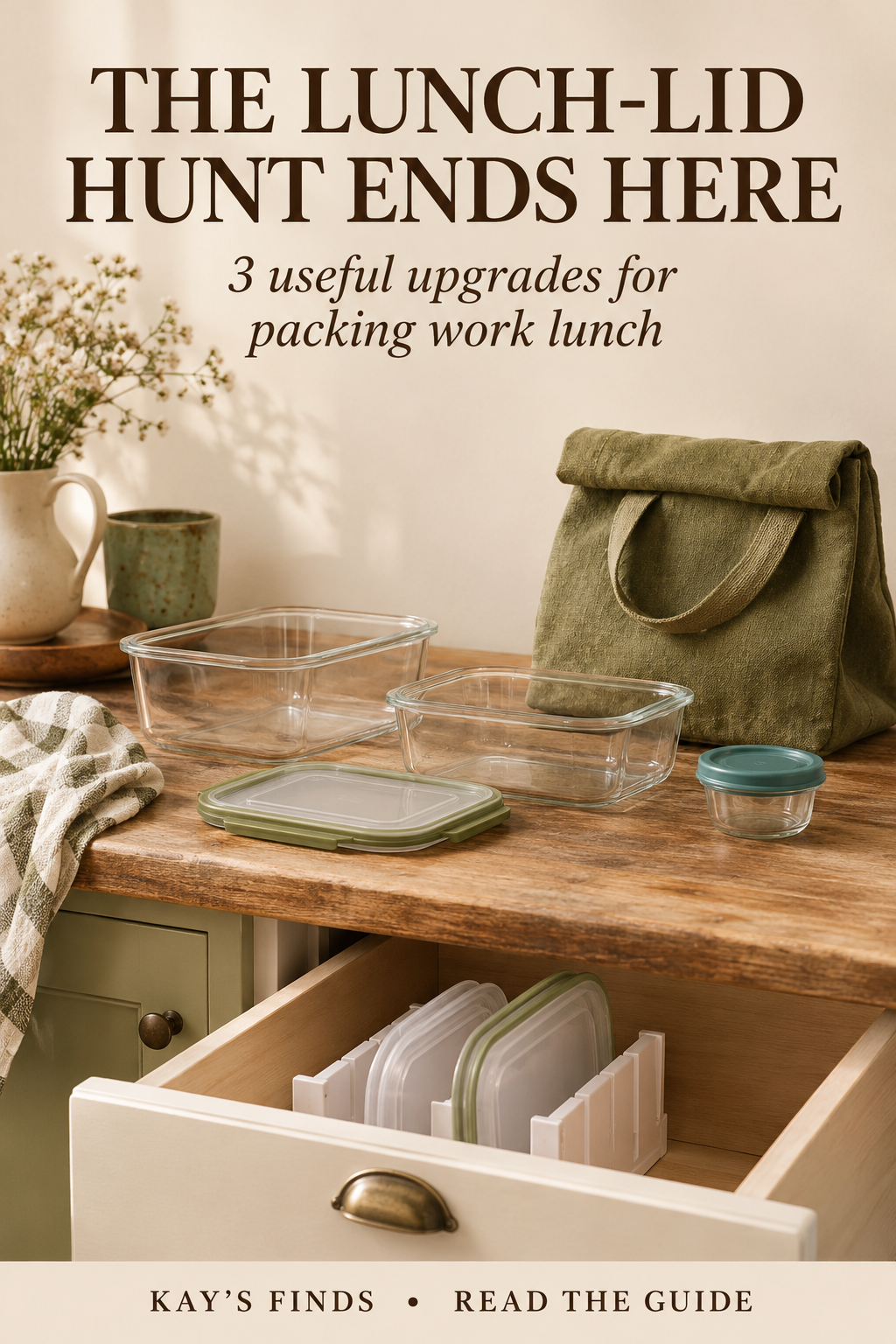
    AI-generated editorial kitchen illustration with food containers, a small sauce pot, cloth lunch bag and upright lids in a drawer. Text reads: The lunch-lid hunt ends here. 3 useful upgrades for packing work lunch.
    AI-generated editorial illustration of a suggested setup. Actual product appearance varies; see the linked product details.

    Browse more practical home guides in Everyday Finds.

  • Lint, Pills or Pet Hair? 3 Useful Tools to Refresh What You Own

    Lint, Pills or Pet Hair? 3 Useful Tools to Refresh What You Own

    A black shirt covered in fluff, a sweater dotted with pills and a sofa collecting pet hair can all look a little tired. The useful purchase starts with figuring out which mess you have: an adhesive roller lifts loose debris, a fabric shaver tackles suitable fabric with attached pills, and a reusable pet-hair roller handles recurring fur cleanup.

    I’d choose the tool for the job that keeps coming back. Here are three options and the checks that help keep a small home purchase from becoming another thing in a drawer.

    This post contains affiliate links. As an Amazon Associate I earn from qualifying purchases.

    First, take one close look

    What you can seeTool to consider
    Loose lint or hair sitting on a garmentAn adhesive lint roller
    Small balls attached to the fabricA fabric shaver, after checking the material
    Pet hair repeatedly gathering on upholsteryA reusable pet-hair roller

    A snag or a loose loop of yarn needs a different approach. Do not treat it as a pill to shave off. If the item is delicate, follow its care guidance before choosing a tool.

    1. A lint roller for the black shirt that attracts everything

    A Scotch-Brite adhesive lint roller is the simple option for loose lint and hair on clothes. You use a clean sticky sheet, then peel it away once it fills. 3M’s product information also confirms that the handle can take matching refill rolls.

    This earns a spot near the coat hooks if you regularly notice fluff on your way out. The useful part is having it where you get dressed, instead of buying a multipack that disappears into several different drawers.

    Before buying: Check the selected listing’s sheet count, number of rollers and whether it includes handles or only refills. Bigger packs are useful only if you will use them.

    Skip it for: Attached pilling. Picking up surface debris and removing pills are different jobs.

    2. A fabric shaver for little pills on a suitable garment

    The white Conair battery-operated fabric shaver has three adjustable depth settings and a removable collection compartment. It takes two AA batteries, which are not included. Those details come from Conair’s product page.

    This is the option to consider when little balls of fiber remain attached to the material. Check the garment first, because a shaver is not suitable for every texture.

    Before using: Conair’s instructions say to test a hidden area with the distance ring at the highest setting, keep the material dry and flat, and move the head lightly without pressure. The manual warns that structured textiles and very soft materials such as Angora can be damaged.

    Buying check: Select the battery-operated model if that is the version you want; rechargeable versions are different purchases. For wool-specific considerations, read the guide to removing pilling from a wool sweater.

    3. A reusable roller for the sofa that keeps collecting pet hair

    The original white ChomChom roller uses a reusable roller and collection chamber. It needs neither adhesive sheets nor batteries. The manufacturer’s directions describe short back-and-forth strokes, followed by opening the chamber to empty the collected hair.

    I’d consider this for a repeated upholstery job: the cushion, chair or blanket that needs another pass soon after you clean it. Keep it near that spot so taking it out is easy.

    Before buying: Confirm that you selected the original size, rather than the travel roller, scraper or a bundle. Follow the instructions for the surface you plan to use.

    Skip it for: Treating attached fabric pills. A pet-hair collection tool is not a replacement for the material check above.

    Do you need all three?

    No. Start with the mess that bothers you most. If an existing tool handles it, keep using that. A small purchase earns its place when it has a clear job and a home close to where you need it.

    Researched buying guide, checked November 29, 2026. These products have not been personally tested for this article. Check the selected model, pack contents and current purchase terms at Amazon.

    Save this guide

    AI-generated editorial illustration of an oatmeal sweater and dark shirt on a sofa with a lint roller. Text reads: Lint, pills or pet hair? 3 different messes. 3 different tools.
    AI-generated editorial illustration of a suggested setup. Actual product appearance varies; see the linked product details.

    Browse more practical home guides in Everyday Finds.