
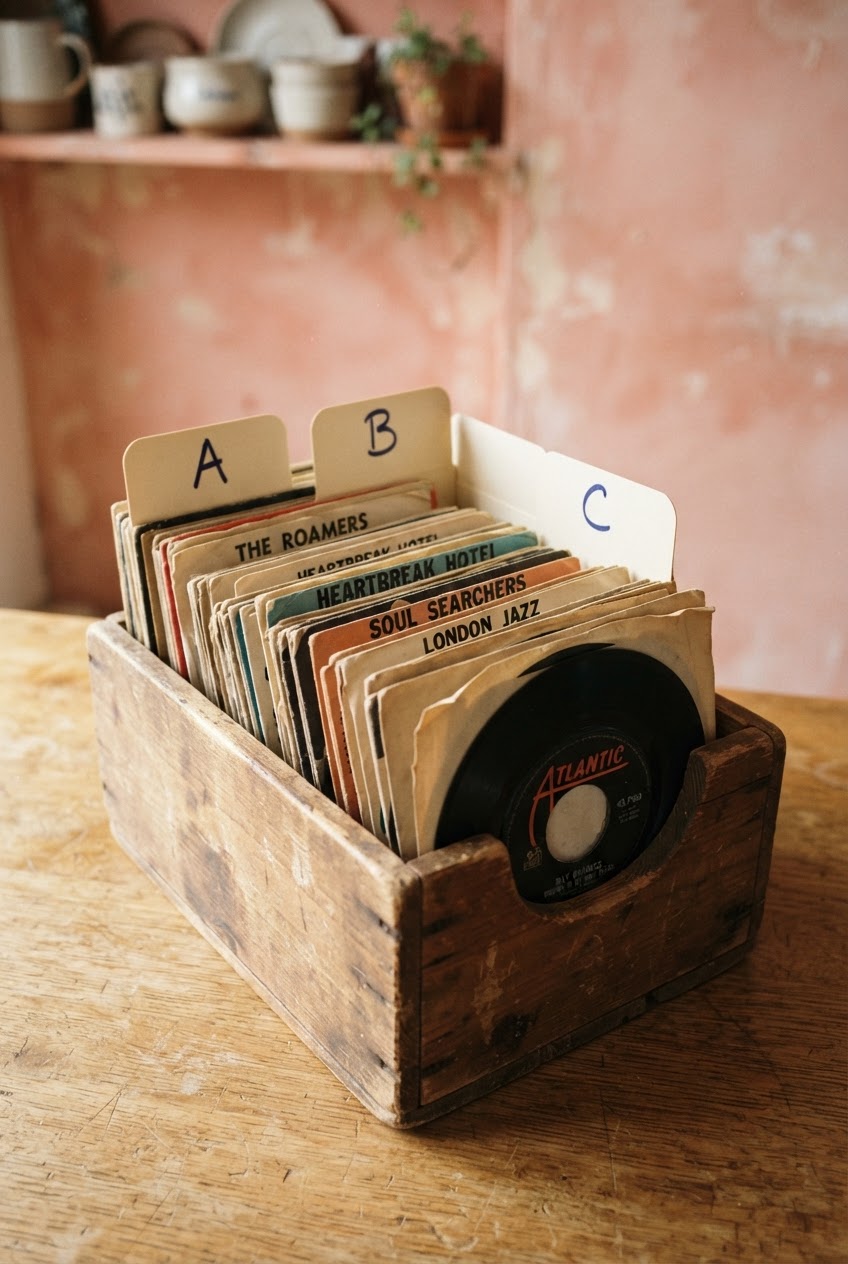
Small 45s disappear surprisingly easily behind a tall divider. I’d make one test card using the tallest sleeve in the crate, then flip past it with one hand. That tells you more about the right height than the nominal size of the record.
Measure the sleeve and the crate opening
Stand the tallest sleeved single on a sheet of scrap card and mark its width and height. Add a little height for a tab. Check the proposed width inside the narrowest part of your crate. Leave enough play for the divider to move freely without scraping either wall. If the crate has a lid or slides under a shelf, check the clearance with the card standing upright.
Cut one tab and do the flip test
Cut the body of the divider to roughly sleeve height and leave a broad raised tab on one third of the top edge. Round the corners and label it in pencil. File it between two sleeves. Can you read the label, reach the record behind it, and shut the lid? Trim in small steps. Use the successful card as a template, moving the next tab to the middle, then to the right.
Let the collection decide the labels
With a small crate I’d start with letter ranges written in pencil. If a whole handful of singles falls under one letter, give that letter its own card. Pick a consistent filing rule for artists and compilations, then write the final headings on the dividers away from the records. Let the ink dry before filing them back in. Smooth, stiff card holds a tab upright; skip exposed staples or sticky tape where sleeves slide past.
As an Amazon Associate I earn from qualifying purchases. Browse heavyweight smooth cardstock sheets on Amazon.