
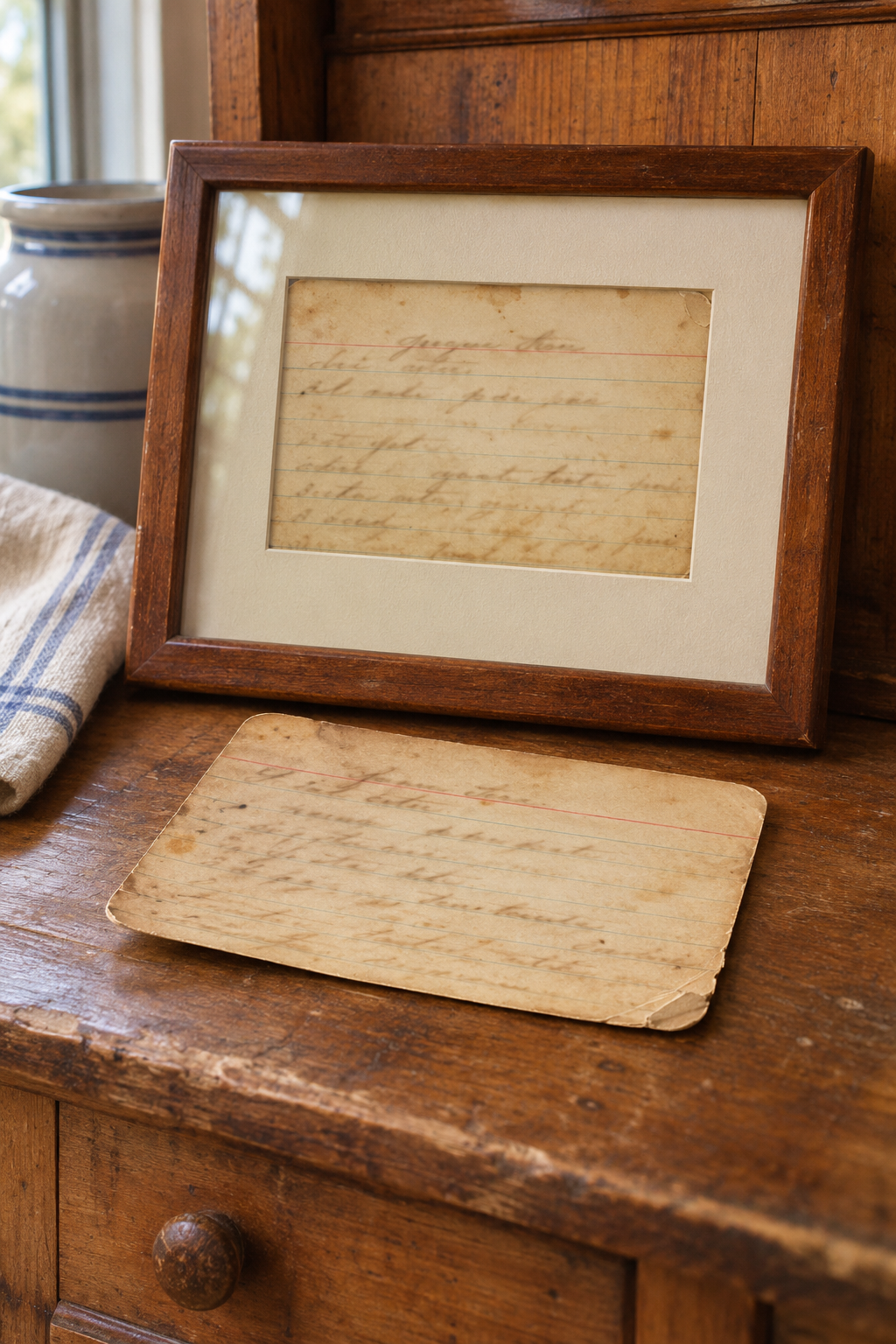
Start with a 5×7 frame if you want a border around a 4×6 recipe card. Check the mat’s actual opening before you buy. If the handwriting reaches the edge, remove the mat and center a copy on a 5×7 backing, or choose a floating frame with enough clear space to show the whole card.
This post contains affiliate links. As an Amazon Associate I earn from qualifying purchases.
How much of a 4×6 card does a mat cover?
A 4×6 mat is usually labeled by the print size it holds. For example, Americanflat’s 5×7 Signature frame with a 4×6 mat has a 3½×5½-inch opening. On a centered 4×6 card, that hides about ¼ inch along each edge. A last line, handwritten date or stained corner might disappear.
Try the paper-window test before ordering
- Measure the real card. Old recipe cards sometimes vary from their nominal size.
- Cut an opening in scrap paper using the mat’s listed opening dimensions. Lay it over the recipe card to see which details you’ll lose.
- If the window hides a note, center a full-size copy on a larger backing or use a floating frame. For a print from a scan, select Actual Size or 100% and check the result with a ruler.
Frame the handwriting and keep the original
If you like an all-glass look, the Umbra Prisma 4×6 in Matte Brass displays a photo or card-size print between two panes of glass. Umbra’s frame specifications describe the floating design. Lay out your copy against the listed dimensions first if you want a visible clear border. The featured image illustrates the matted option.
Scan both sides if the recipe continues on the back. Display a copy and store the original away from bright light, following the Library of Congress guidance on framing paper keepsakes. To keep a stack of originals together, see the 4×6 family recipe card binder guide.
For a smaller holiday keepsake, make a 2×3 ornament from one line of a handwritten recipe.