
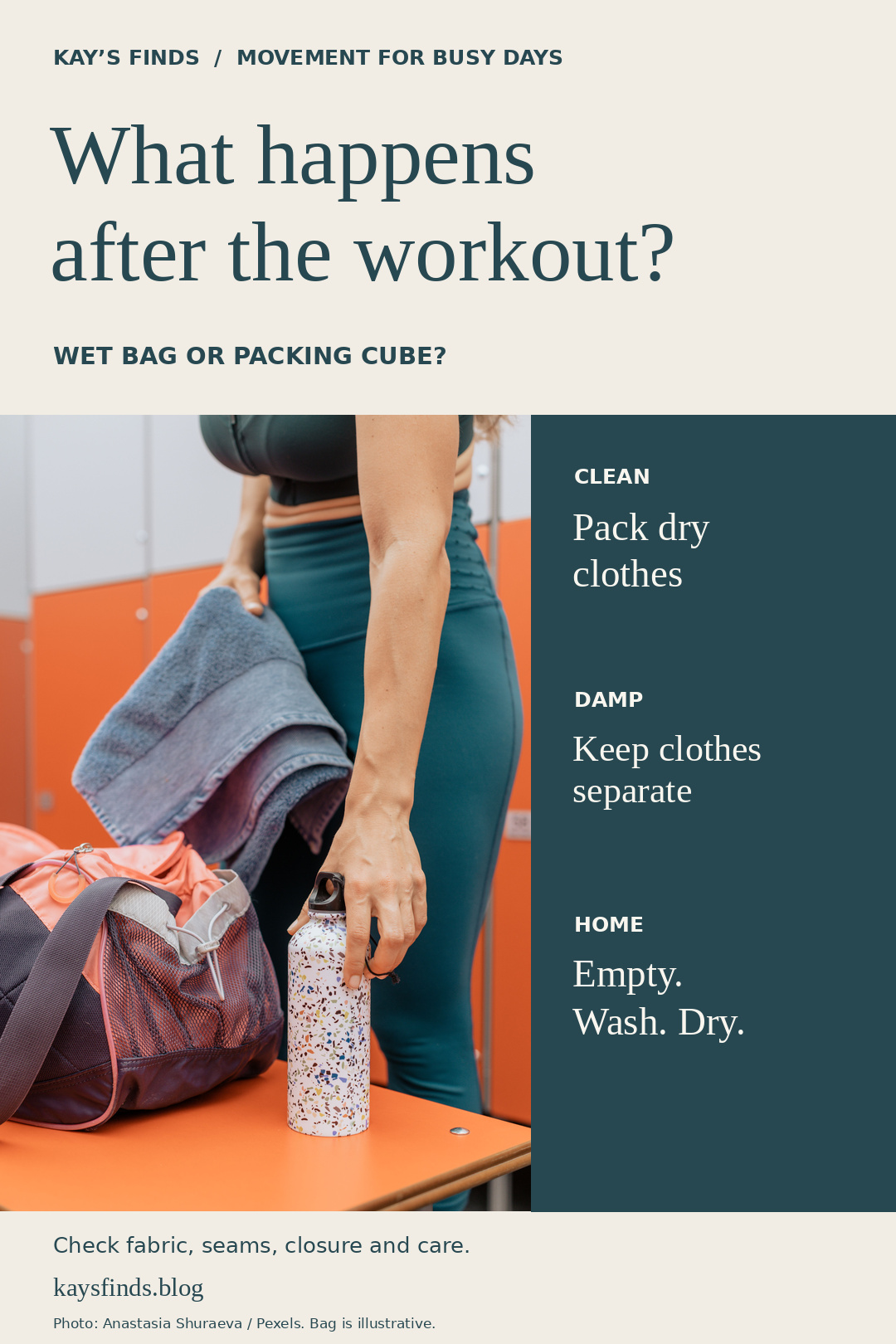
The part of packing for a workout I’d plan around is the clothes coming home. For a before-work or lunchtime session, I’d want my clean outfit easy to find and my damp workout clothes somewhere separate afterward.
My starting point would be a packing cube for clean, dry clothes and a washable wet bag intended for damp items for the return trip. I’d check what I already own before buying either. The useful upgrade is having a place for each stage of the day.
What I’d pack where
| What I’m carrying | What I’d choose | What I’d check |
|---|---|---|
| Clean, dry work clothes | A packing cube or clean pouch | Room for the outfit and easy access |
| Damp workout clothes | A washable wet bag intended for damp items | Fabric, seams, closure and washing instructions |
| Worn clothes that are already dry | A separate organizer I already own | Keeping them apart from clean clothes |
| Dripping swimwear or a soaked towel | Remove excess water first; check the bag’s intended use | Whether the whole bag is rated to contain liquid |
“Waterproof fabric” is the beginning of the check
I’d read what the claim applies to: the fabric, the seams, or the finished bag including its closure. I’d look for sealed seams and a clear description of how the zipper or other closure handles moisture. A fabric claim alone wouldn’t be enough for me to assume the whole bag can hold standing water.
The name “packing cube” doesn’t settle this either. Eagle Creek’s range includes mesh-panel Reveal cubes and waterproof Dry cubes with welded seams. I’d compare the construction of the actual item, especially if I already have something suitable.
The unexpected option I’d compare: a reusable wet bag
A bag sold alongside baby or swim supplies can still make sense for a gym outfit. Bumkins specifically includes dirty gym clothes among the intended uses for its Lunar Phase Wet Bag. The listed construction is waterproof polyester fabric with a PU coating, heat-sealed seams and a zipper.
It measures approximately 12 by 14 inches and has one compartment. Bumkins describes it as non-gusseted and non-stretch. I’d use those measurements as a starting point and compare them with my actual outfit; they don’t tell me whether a bulky towel and leggings will fit together.
Before choosing a size, I’d gather the clothes I’d normally change out of, fold them loosely, and check the bundle against the bag’s dimensions and opening. I’d leave space to close it without forcing the zipper. Clean clothes would stay in their own organizer.
My return-home plan would be part of the purchase
I’d use the wet bag to carry damp clothes home, then empty it when I unpack. Itzy Ritzy’s wet-bag guidance recommends same-day unloading and explains that these bags are for damp items rather than standing liquid.
- Take out the clothing and follow its washing label. If washing has to wait, I’d open the bundle and let it dry rather than leave it zipped in the bag.
- Wash the bag according to its own care instructions; those can differ from the clothing’s instructions.
- For the Bumkins example, turn the bag inside out before washing. Its product page recommends hang drying, and its care page says to dry it fully before storage.
- Once everything is clean and dry, return the empty bag to the gym bag so it’s ready for the next session.
I’d check the Bumkins care instructions before cleaning it and choose a bag whose washing routine fits mine.
For the rest of the morning setup, see my gym-before-work bag checklist. If you’re comparing organizers for dry clothing, my compression packing-cube guide explains how the zipper version works.
Photo credit: Anastasia Shuraeva via Pexels, used under the Pexels license. The photograph illustrates the topic; it is not a photograph of me or a hands-on product test.