
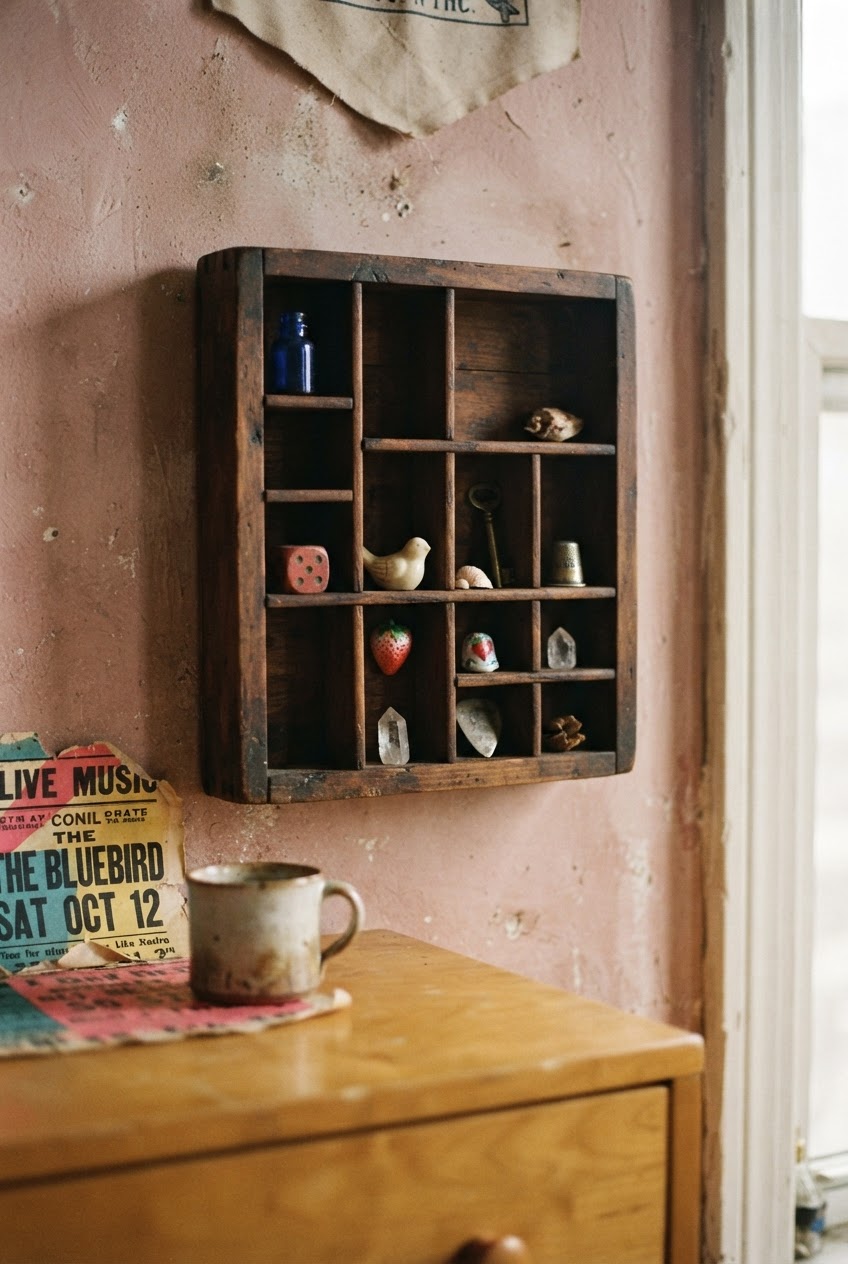
A blue glass bottle can disappear at the back of a bookcase. Give it one little wooden compartment and suddenly you notice its color from across the room. A vintage printer’s tray or a newer cubby shelf works well for the things that usually end up in a dish on the dresser.
As an Amazon Associate I earn from qualifying purchases. The room image is an AI-generated styling illustration.
Measure the bird, the bottle and the piece with the widest base
Pick the tallest, widest and deepest pieces you want to show. Sometimes those are three different objects. Write down the maximum height, width and depth, including tails, handles and stoppers. At the flea market, measure inside the compartment from the back panel to the front edge. On a shallow tray, a bird’s tail can hit the back before its feet are fully on the shelf.
For an online listing, look for interior measurements or ask the seller about the particular cubby you want to use. The outside depth includes the wood at the back. Leave enough space above a little bottle to lift it out with your fingertips. For a rounded object, choose one with a flat resting side or display it in a tiny dish that fits inside the opening.
Make a floor arrangement before you hang the shelf
Lay the tray face up and set out your objects. Pick one that you want to see first, then leave its neighboring cubby empty. Photograph the arrangement before you take everything out to hang it. A pale shell shows up well against dark wood, while blue glass tends to read best in a slot that catches some sidelight.
If you prefer a ready-made option, see the Ikee Design 12-compartment coffee-finish display shelf on Amazon. Compare the opening shapes with your three measurements, especially if your tallest keepsake has a narrow base.