
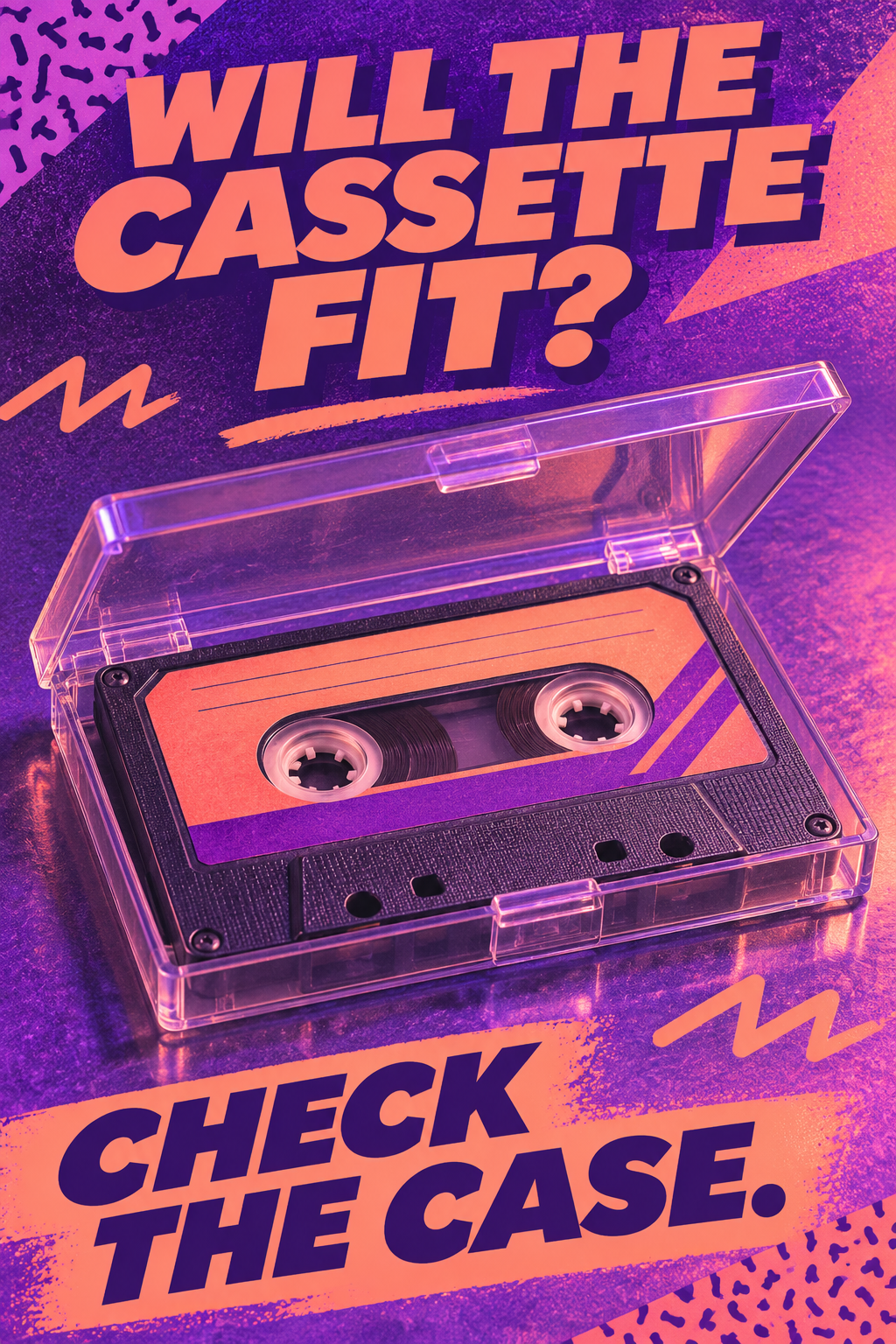
For a cracked single-cassette case, start with a clear hinged case labeled for a standard compact audio cassette. Save the original paper insert, commonly called a J-card. If the case came from a multi-tape set, has an unusual shape, or needs to hold a thick booklet, check the inside before ordering.
Check three things before you buy
Compare the hinge and the cassette tray with your old case. If the new case has spool posts, make sure they line up with the cassette hubs without pressing down. Then measure the insert where it folds at the spine. Look at the usable room inside the case rather than only its outside measurements. A thick foldout can make the latch strain even when the tape fits.
Try the empty case first
Lay the J-card in the new case without the cassette, then close it gently and see whether the paper sits flat. Remove the card and test the cassette by itself. If both fit alone but the case won’t shut with both inside, look for a roomier case or store the original artwork separately. Avoid trimming the original to fit a replacement.
BCW’s clear case, SKU 1-CT-CASE lists a 4⅙ × 2½ × 9⁄16-inch interior (width × height × depth) and is made for standard audio cassettes; the manufacturer flags that oversized or nonstandard formats may not fit. Buy one or borrow a compatible empty case for a first fit if you have an unusual insert.
As an Amazon Associate I earn from qualifying purchases.
Search for the BCW clear cassette case by SKU on Amazon (paid link). If the tape is a keepsake rather than a shelf copy, see how to display a mixtape with its J-card.