
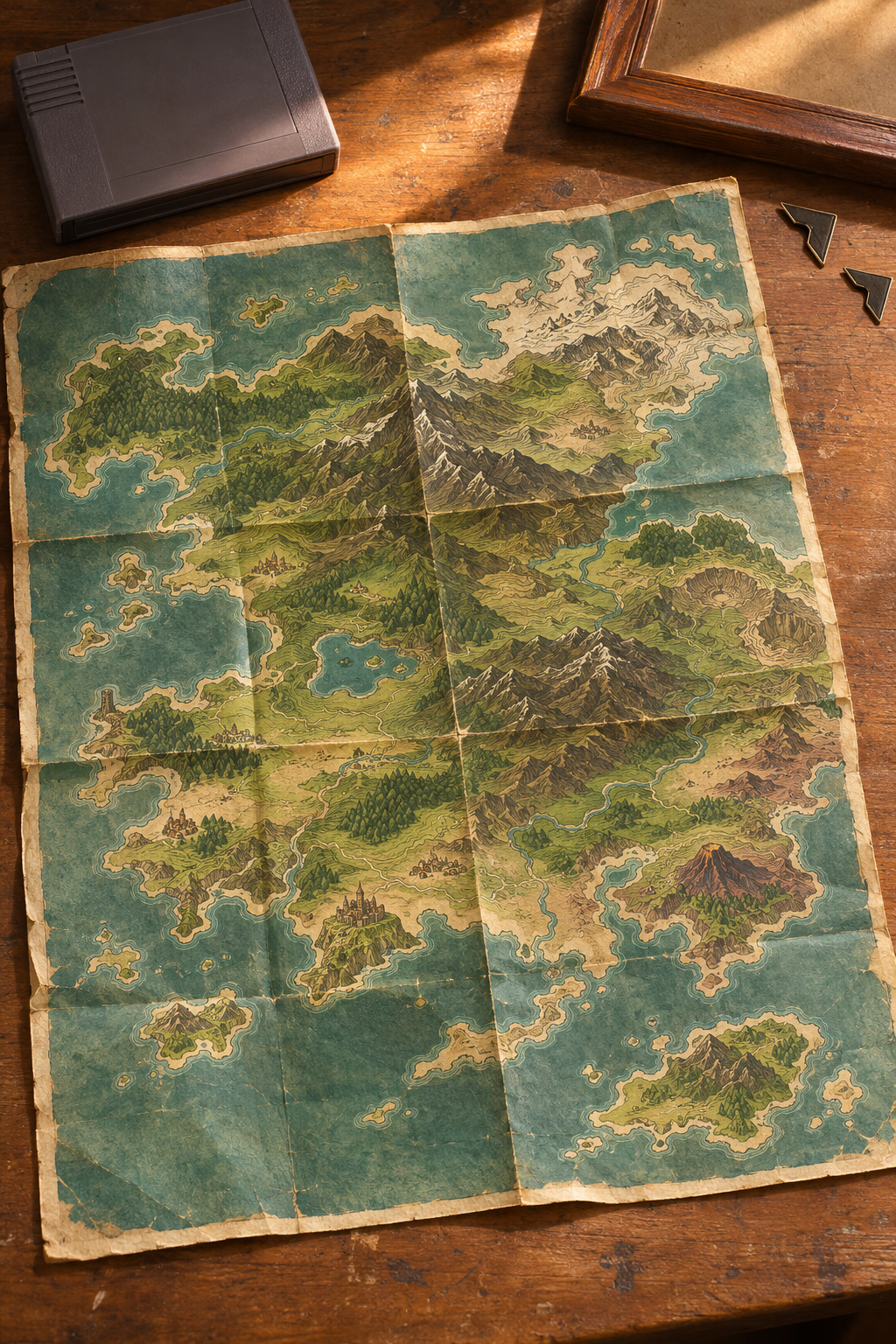
A paper map tucked into an old game case can make better wall art than a generic poster. Display a copy and keep the original with its edition details. That leaves the old fold lines and paper in one piece.
This post contains affiliate links. As an Amazon Associate I earn from qualifying purchases.
Photograph the map before flattening anything
Open only the folds that move easily, rest the paper on a clean surface, and take a photo from directly overhead in even light. Capture the back too if it has a second map, instructions or the publisher’s information. If the paper crackles, tears or resists, stop rather than pressing it under scanner glass. The National Archives’ paper guidance says to open folded documents only when the paper is supple enough not to crack along the folds.
Make the map fit the frame, not the other way around
Measure the actual mat opening. Resize the whole copy to sit inside it with a little breathing room; don’t stretch the image or cut through the legend just to fill a standard frame. Use an existing frame and print a paper proof. Name the game, platform, and edition on a separate card if you want a small label. The Library of Congress cautions against long-term display of original paper because light damage is irreversible.
Store the original at the size it actually needs
Use an acid-free folder with enough room to support the map without adding new folds. Keep it flat if it opens safely. If it doesn’t, keep it supported as-is and skip the mounting project on the original. A Lineco 11×14 folio box (paid link) is one option for maps and folders that comfortably fit those actual interior dimensions. Measure both before ordering. The map in the photo is illustrative, not an insert from a real game.