
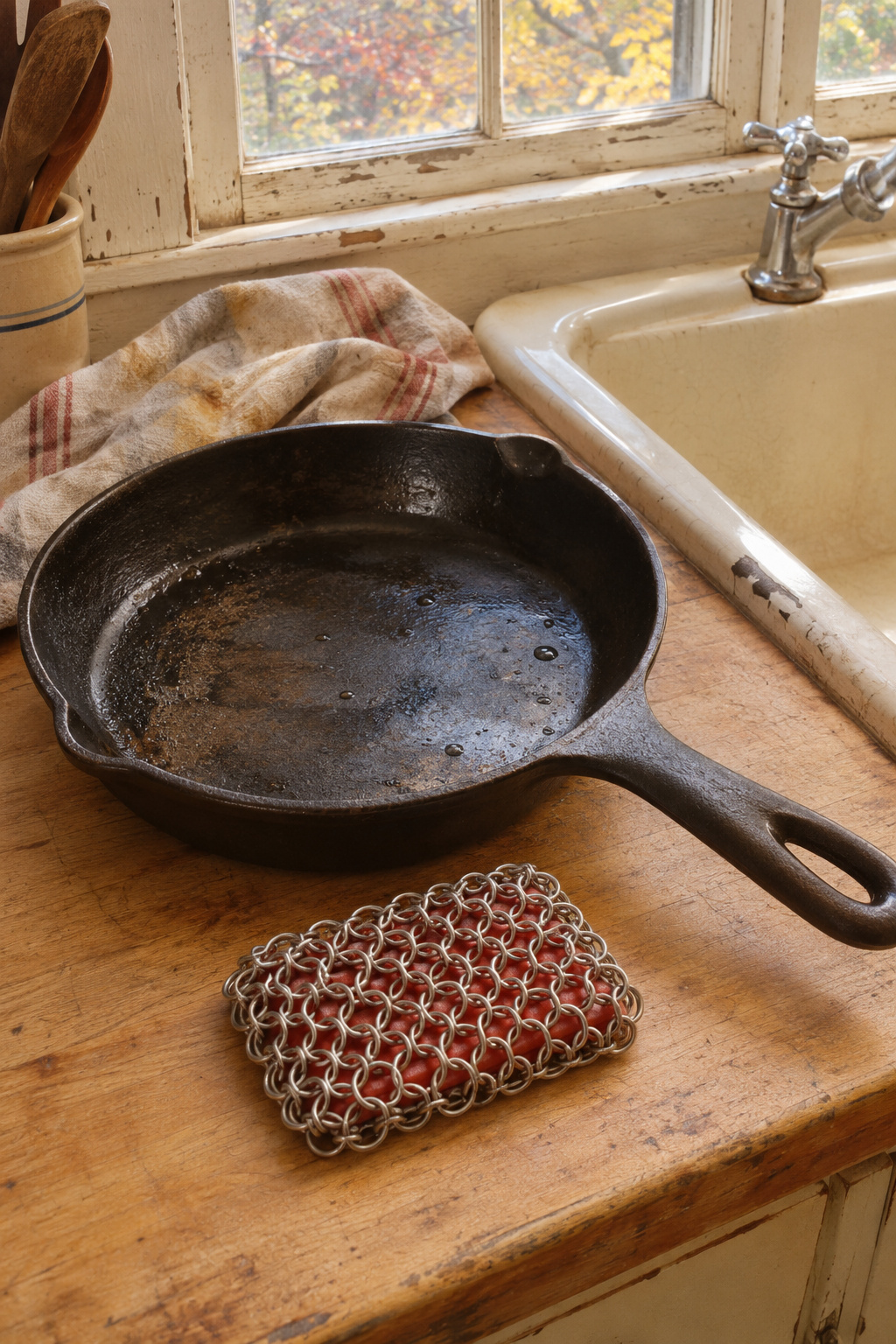
A chainmail scrubber is useful for stubborn food on bare seasoned cast iron after a brush or pan scraper comes up short. For most everyday cleanup, start with warm water, a little dish soap if needed, and a nylon brush. For enamel, follow the maker’s gentler care instructions.
This post contains affiliate links. As an Amazon Associate I earn from qualifying purchases.
Check the cooking surface before you scrub
An enameled skillet can have a dark interior, so color alone doesn’t tell you whether the pan is bare iron. If you bought it secondhand, check the bottom for a maker’s mark and look up the model before choosing a tool. Lodge gives different cleaning instructions for bare and enameled iron. Bare cast-iron care · Enameled cast-iron care.
| What you’re cleaning | Tool to try |
|---|---|
| Bare seasoned skillet with a normal layer of food residue | Nylon brush or a pan scraper. |
| A small spot of stubborn cooked-on food on bare iron | Try the brush first. Use a cast-iron chainmail pad on the stubborn spot if needed. |
| Enameled cast iron | Use a soft sponge or an enamel-safe nonabrasive tool per the maker’s instructions. |
A chainmail scrubber to compare
The Lodge ACM10R41 combines stainless steel chainmail with a red silicone core, which gives you a grip while you work on one spot. Lodge lists it for cast iron and carbon steel and describes it as a tool for tough food residue. For routine washing, Lodge’s care guide starts with a nylon brush or pan scraper. Lodge scrubber specifications.
Check the red Lodge Chainmail Scrubbing Pad on Amazon.
Once the food comes loose, rinse the bare pan, dry it completely, and wipe on a very thin layer of cooking oil. If the mark you’re trying to remove is orange rust or flaking material, check the pan’s condition and follow a restoration guide. The featured image illustrates a chainmail scrubber next to a seasoned skillet.