
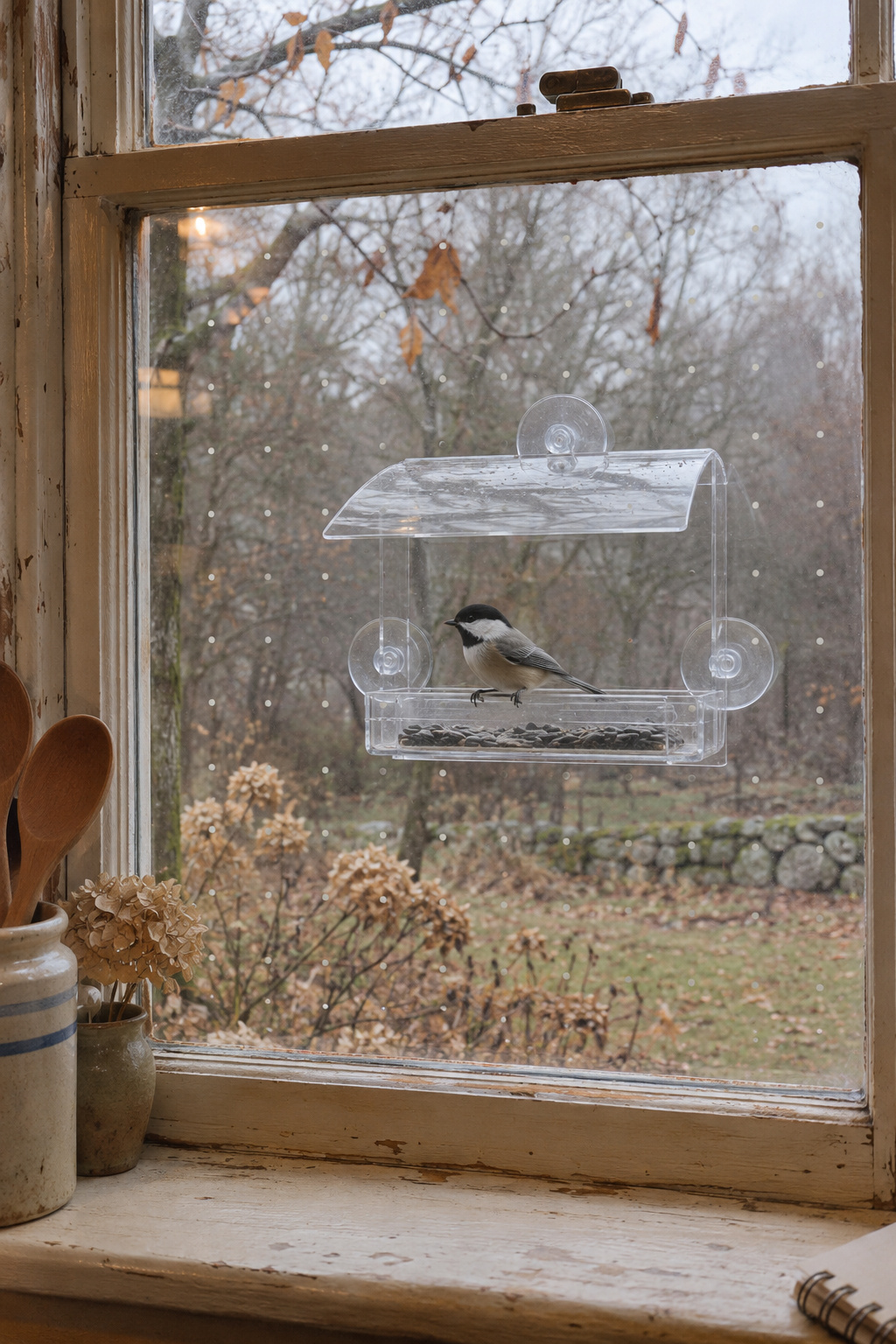
A suction-cup window bird feeder needs a smooth patch of exterior glass and enough room to reach the seed tray. Suction cups need a continuous surface to grip. If an exterior screen covers the only reachable spot, choose another window or a feeder designed for a hanger or pole.
This post contains affiliate links. As an Amazon Associate I earn from qualifying purchases.
Check the window and tray before you buy
- Find a flat exterior pane you can reach. Keep the mount clear of the sash, trim, and screen. Confirm you can refill and remove the feeder comfortably from a safe position.
- Check how the tray comes out. Measure the space around the proposed mount up to the sill, nearby trim, or overhang. A sliding tray should have a clear path and room for your hand.
- Start with a clean pane. Follow the feeder’s instructions for cleaning the glass and mounting each cup. Check the grip before filling the tray.
Plan for the glass and the cleaning
Use exterior bird-visible markers on the surrounding glass to reduce collision risk. U.S. Fish and Wildlife Service guidance calls for markers spaced no more than two inches apart. Mount the suction cups on clean, smooth glass as the maker directs. U.S. Fish and Wildlife Service bird-friendly window guidance.
Choose a tray you can remove to wash. Cornell recommends cleaning seed feeders about every two weeks, or more often during heavy use or wet weather. Cornell Lab feeder cleaning guidance.
A removable-tray feeder to compare
Nature Anywhere’s Birds-I-View uses suction cups and a sliding seed tray. Check the mounting instructions against your own window before ordering. Birds-I-View setup instructions.
Check the Nature Anywhere Birds-I-View on Amazon.
The featured image illustrates a clear feeder mounted to glass.